Business Ideation to Business Plan Preparation (Part 2)

Part 1 – Business Ideation Part 1

As explained earlier in the introduction, Business ideation is the core of the success of any new enterprise. A holistic and scientific process has to be followed to arrive at the right decision in terms of identifying the right business opportunity.

Business ideation process involves 4 phases:

Phase 1: Business Idea Generation

This involves generating a basket of business ideas. This is because it is essential for the entrepreneur to have a choice to select the best and the right business. In this phase, the entrepreneur shall generate at least 20 plus business ideas. The methodology of the idea generation is explained in the further contents.

i- Generating business ideas based on locally available resources: Let’s take an example of turmeric. Tumeric is available at RM3-RM6 per kilogram at the farm level. While turmeric powder sold at RM20-RM40 per kilogram in the market. While some of the turmeric extract used in the pharmaceutical industry may reach RM100 per kilogram in the market. This simple example we can understand that the value of turmeric can be increased from a mere RM3 to RM100. A lot many ideas can be generated with this method.

ii- Inputs to the primary sector: The primary sector comprises of agriculture and animal husbandry sector. If you think about what all is required for the sector, many ideas will be generated from here.

iii-Business idea generation based on demand based sector: Demand-based sector caters to all those products which are used by the mass audience on a regular basis, maybe daily, weekly, fortnightly basis.

iv- Business idea generation based on waste products: The ever famous Malaysian born tailor collects used, worn and unused jeans to turn into retro wallets, bags and other collection for the youth market.

v- Innovation based business ideas: Commercialization of creative ideas, called innovation. Developing creative ideas is a challenge.

vi- Deletion: Concept of deletion Is all about contemplating deleting a component or a function in an existing product/ business model so that you can come up with a novel business idea.

vii- Addition: Similar to deletion. But, here deliberation is made on adding new features/ components to existing product/ business models.

viii- Substitution: This is about the substitution of any component/ features.

ix- Problem Solving: This is about identifying the right problem and finding a unique solution.

Phase 2: Screening Of Ideas

In phase one, the new entrepreneur generates a basket of ideas, Maybe 20 business ideas. But all the 20 ideas may not be viable. The entrepreneurs need to screen out many of those ideas based on different criteria’s such as:

i- Technical Feasibility: Feasibility aspects with regard to the availability of manufacturing process, technical know-how, plant and machineries etc.

ii- Market feasibility: The demand and supply position of the product/service.

iii- Commercial Viability: The profitability aspects and possibilities of the quantum of returns from the business.

iv- Personal likes and Dislikes: For small enterprises, personal likes and dislikes also matters to start a business. The personal capabilities/personality aspects also counts. For example, if the aspirant entrepreneur is an introvert and would start a business that requires extensive marketing and promotion/sales activity, it may be a mismatch, Instead, the aspirant entrepreneur may opt for starting any ancillary industry, where this business would make products or components required for another large industry.

At the end of this process, the new entrepreneur will be left with 3-4 business ideas.

Phase 3: Market Research

Market research is a detailed study of all the finer aspects of a business. The new entrepreneur shall collect data about 3-4 business ideas left at the end of the 2nd phase.

Among summarize of key components of a Market Survey are as follows:

i- Introduction – eg of products, users, suitability

ii- Product – eg specifications, size, brand, packing, selling price

iii-Assessment of Demand – eg class and type of consumers/ clients.

iv- Supply position – eg current availability and production capacity vs utilization

v- Marketing practices – eg distribution, packing, forwarding

vi- Own marketing plans and strategies – eg own market share of the supply-demand gap

In the next posting, we will discuss on the differentiation of the Business Plan for different stakeholders.

Business Ideation to Business Plan Preparation (Part 1)


The big question for a person who wants to start a new enterprise is “What Business to start?”

Identifying the right Business Opportunity is the core of success for any startup. A systematic and scientific approach is necessary for Opportunity Identification and we have opportunity to learn the process and structure, since it is not advisable to blindly copy any other’s business idea, which is generally done by people at large, resulting in start-up failures, because ideas which succeed in some places may not succeed in the same way in other places. Lots of due diligence and checks have to be done to ensure minimizing chances of failure.

This is one of the important attributes of an entrepreneur. An entrepreneur takes ‘calculated risk’ and not ‘risk’, it means it is a sound decision taken on the basis of extensive research and due diligence.

For the success of any enterprise, three things are very important on top of other criteria, viz., MONEY, PERSON and BUSINESS IDEA. If these three things are to rank in terms of their importance:


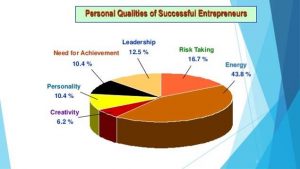
i- The prime important component is the “Person” behind the business. If the person behind the business idea is not entrepreneurial, the business is bound to fail no matter if the business idea is 100% viable and sufficient money is invested in the business. Beyond workable ideas and able to monetizing, a “motivation” factor on the person is very much crucial. Mclelland studies show energy or motivation contributes over 43% of business success, and there are several psychometric tests to justify the above traits either GETT (General Enterprise Tendency test, Motivation Trigger Color test or SRQ (Self-Rating Questionnaire). And yes, some of these tests being conducted beforehand by start-up incubators in some countries.

ii- The second most important component is the ‘Business Idea’ because the success of the business depends on the viability of the idea.

iii- The last important component is “Money”.

What do you think the most important aspect of Enterprises?

In the next posting, We will share on ‘Business Ideation Process’ & Business Plan Preparation

Business and Finance Series Training 2020

PART OF OUR FINANCE LEARNING SERIES

Basic/Advanced Accounting.
Report and Budgeting.
Advanced Accounting.
Business Finance: Understanding Basic Financial Statement & Draft Business Plan.
Business And Finance Appreciation.
Personal Finance For Individuals and Business (SME).
Building Finance Into Your Management Practice.

1- Finance Workshop for Non-Financial Executives (2-3 Days)

From finance basics to understanding the essence of cash flow to corporate value creation, this comprehensive training program covers all aspects of corporate finance. Get a complete financial education in just four days…and be prepared to make more powerful, informed business decisions. From understanding the essence of cash flow to learning how to create value on a corporate level, this comprehensive program covers all the principles of corporate finance.

2- Managing Your Costs and Budget More Effectively (2-3 Days)

Do you know the costs associated with every area you oversee? Do you fully understand the financial impact of your decisions? Are you familiar with the ins and outs of forecasting and budgeting?
In this course, you will discover how to quantify the results of your work. Determine whether the profit earned is higher than the costs of site space, machines, inventory, customer credit, etc. And measure the value you create.
How You Will Benefit

3- Building Finance Into Your Management Practices (2-3 Days)
Do you “get” economic and financial performance? Are you familiar with the language of finance? Aware of the financial consequences of your decisions? Did you know that your decisions are actually all financial decisions? That’s why it is essential for you to understand the financial consequences of your actions. Once you clearly understand the ins and outs of economic and financial performance, better decision-making will follow.

4- Understanding Basic Financial Statement and Draft Business Plan (2 Days)
Do you know that many Small Business Owners fail to understand key components in financial statements, alarming cash flow and to read a simple profit and loss as well as key elements within? This workshop focus is driven on instilling an understanding of the basic financial report, key elements to focus on determining an organization’s financial health check. To lead and guide draft key success factors in business plan, areas that focus on funding or seeking investors.

5- Personal Finance for Individuals and Business (SMEs) (2 Days)

Do you know that keeping and managing wealth is as important as building the wealth itself, failing to manage it may cost financial distress and up to depression as managing wealth normally arise at a post-retirement stage, where one is no longer in service and has no active income! Understand the importance of financial cycle in life, understand the financial instrument in the markets, assist to smoothen personal life goals and SME’s. Avoid making financial mistakes and guide towards best practice in personal finance from personal debt management, investment, risk management, building asset column up to post-retirement strategy.

6- Business and Finance Appreciation (2 Days)

Do you understand what it takes to understand your business, a simple approach to understand how a business and financial component works. Focus drove on the understanding of business concepts, elements, and principles. Types of business models available. Component of the business plan. Marketing.Operations. Customer service. Accounting and finance.

In-House Program

In-House Program provides a greats opportunity for personnel from the same organization to focus on specific workplace issues.Click here for full program —> FMC Training Consultancy

Reach Us

We conduct Training Need Analysis and if you look forward to further inquire programs that suit your business climate, we are here to listen and cater to your unique needs. We may be contacted at admin@faisalmalikco.com