When Giants Fall: Inside Corporate Collapses, Scandals, and the Governance Gaps That Enabled Them

The Fragile Trust Behind Corporate Power

Every so often, the world wakes up to another corporate earthquake. The headlines are chilling:

“Billions Lost. Jobs Gone. Leaders in Handcuffs.”

From Enron and Lehman Brothers to 1MDB, Wirecard, and FTX, these scandals expose something deeper than financial misconduct, they reveal fragile systems, weak governance, and institutional blind spots.

For decades, we’ve trusted that large corporations and regulated institutions are safe, audited, and well-governed. But when trust breaks, entire economies tremble.

“Corporate failures are rarely accidents.
They are engineered over time, often in plain sight.”

Let’s go inside these collapses, the scandals, the cover-ups, and the systemic failures, and uncover the lessons boards, regulators, and leaders must urgently learn.
 

World’s largest Corporate Incidences

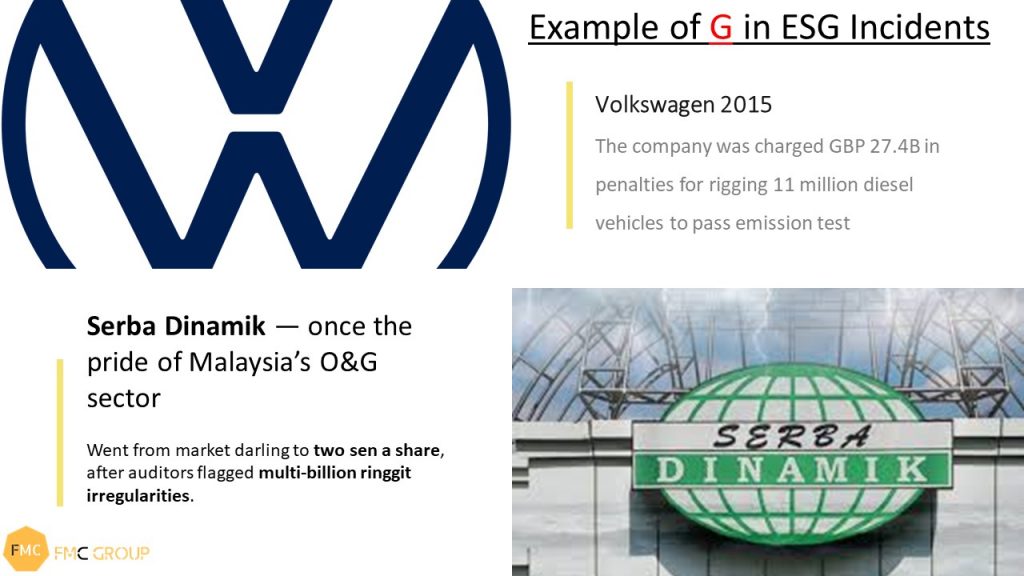
Wirecard — Germany’s Fintech Mirage (2020)

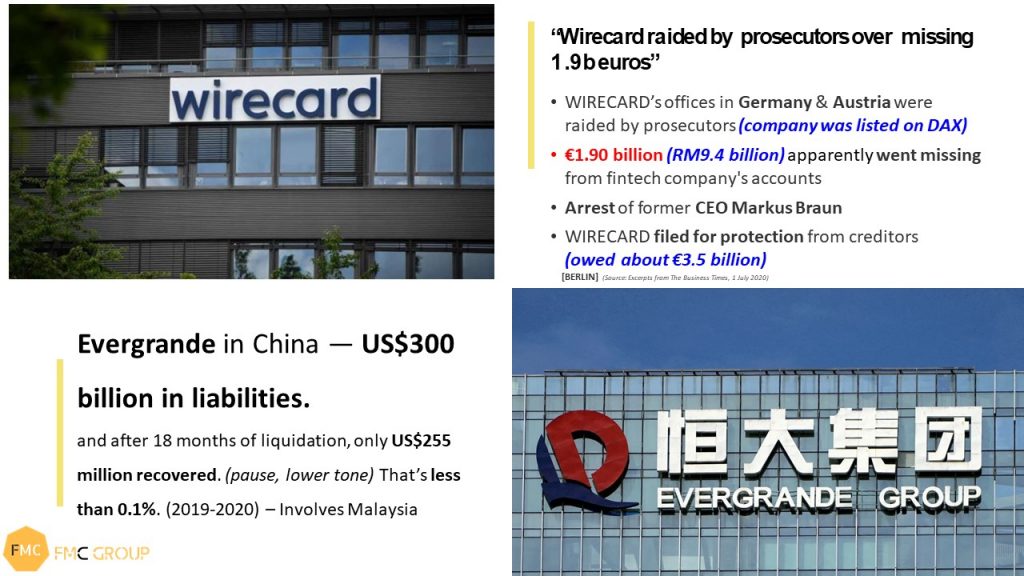
Wirecard was Europe’s fintech darling, valued at €24 billion in 2018. Investors believed the hype; regulators defended it against critics. But in 2020, auditors discovered €1.9 billion in “cash reserves” didn’t exist.

What Happened

  • Investigative journalists repeatedly warned of suspicious practices.
  • Regulators defended Wirecard and even investigated critics.
  • When auditors finally refused to sign off accounts, the company collapsed within days.

Governance Lessons

  • Fast growth demands stricter, not looser, regulation.
  • Board members must possess digital literacy to challenge fintech models.
  • Regulator capture, defending companies instead of protecting markets, erodes trust.
 

The Institutional Void

Evergrande: Debt, Deception, and Delisting

From Dream to Debt Mountains

Evergrande began in 1996 as a rising private developer. By 2017, it was among China’s market darlings, judged on its rapid expansion—1,300 projects across 280 cities—with revenue soaring to over RMB 450 billion (~US$70 billion)

Yet beneath the surface, cracks were forming. By 2020, regulators imposed the “Three Red Lines” to restrain developers’ borrowing:

  1. Debt-to-assets ratio < 70%
  2. Net debt-to-equity < 100%
  3. Cash-to-short-term debt ≥ 100%

Evergrande violated all three, triggering a liquidity crisis. The company relied on steady sales and continued borrowing to keep operations alive—a precarious balance that would soon collapse

Despite over US$45 billion in creditor claims, liquidators only recovered about US$255 million through asset sales—barely a fraction.

As of August 2025, Evergrande was delisted from the Hong Kong Stock Exchange—its valuation once in the tens of billions now reduced to mere hundreds of millions

Governance Takeaways

  • Excessive leverage is a fatal vulnerability. Boards must actively manage debt, not encourage it.
  • Regulatory overreach matters. The “Three Red Lines” spotlighted institutional fragility across the sector.
  • Auditor independence is non-negotiable. PwC’s misconduct highlights the need for accountability.
  • Data distortion masks real risks. Overstated earnings undermine stakeholder trust and delay corrective action.
  • Liquidation may come too late. By then, reputational damage, legal entanglements, and stakeholder losses are systemic.

Serba Dinamik: A Local Flashpoint of Trust vs Transparency

Rapid Rise and Investor Glamour

Serba Dinamik rose quickly in Malaysia’s oil & gas services sector, becoming a Bursa Malaysia blue-chip, with investors drawn to its growth promise and export deals.

Auditor’s Doubts and Boardroom Firestorms

In mid-2021, KPMG flagged major concerns: unverifiable contracts totaling RM 3.5 billion, ghost suppliers, and dubious external confirmations. This sparked an urgency review by EY Consulting, mandated by Bursa Malaysia The Edge Malaysia.

Management’s response was astonishing: its chairman labeled KPMG a “shoplot auditor” and threatened to lobby the government against the firm

Board Turmoil and Investor Exodus

Corporate governance broke down amid board departures. Multiple independent directors resigned, citing an inability to fulfill their fiduciary duties, as a legal battle unfolded over disclosure. Market confidence vanished—Serba Dinamik’s market cap fell from RM 6 billion to RM 1.3 billion

Governance Lessons

  • Auditors raising red flags must be protected, not attacked.
  • Governance depends on transparency—not intimidation.
  • Independent directors need legal support to uphold disclosure and integrity.
  • Regulators must act swiftly to preserve market confidence.
 

The Key Matters: Good Governance

The Institutional Void Problem

Here’s the deeper issue: scandals like these aren’t just about bad leaders or rogue CEOs. They’re about institutional voids, gaps in systems where governance exists on paper but fails in practice.

These voids emerge when:

  1. Weak Boards
  • Boards that fail to challenge management.
  • Rubber-stamp approvals instead of exercising oversight.
  1. Auditor Blind Spots
  • Over-reliance on numbers without questioning assumptions.
  • Clean opinions… even when warning signs were there.
  1. Regulatory Gaps
  • Rules exist — but enforcement lags.
  • Oversight bodies stretched thin, sometimes conflicted.
  1. Culture of Silence
  • Employees see red flags but fear retaliation.
  • Whistleblowers ignored.

      5- Culture drift: Charismatic founder or growth-at-all-costs norms silence dissent.

     6- Risk committees focus on checklists instead of real threats.

“It’s not just individuals we must hold accountable, it’s the systems that allow them to thrive.”

Until we fix these systemic flaws, the next big collapse is inevitable.

Five Imperatives for Boards and Leaders

From these scandals, five governance imperatives emerge:

  1. Strengthen Board Accountability
    Boards must challenge management, not rubber-stamp decisions.
  2. Demand Radical Transparency
    Insist on real-time reporting beyond glossy annual statements.
  3. Integrate Risk Governance
    Treat risk as strategic, not operational.
  4. Ensure Independent Oversight
    Keep boards, auditors, and regulators structurally separated.
  5. Build an Ethical Culture
    Tone from the top drives behavior at every level.

These aren’t just compliance exercises, they are survival strategies.
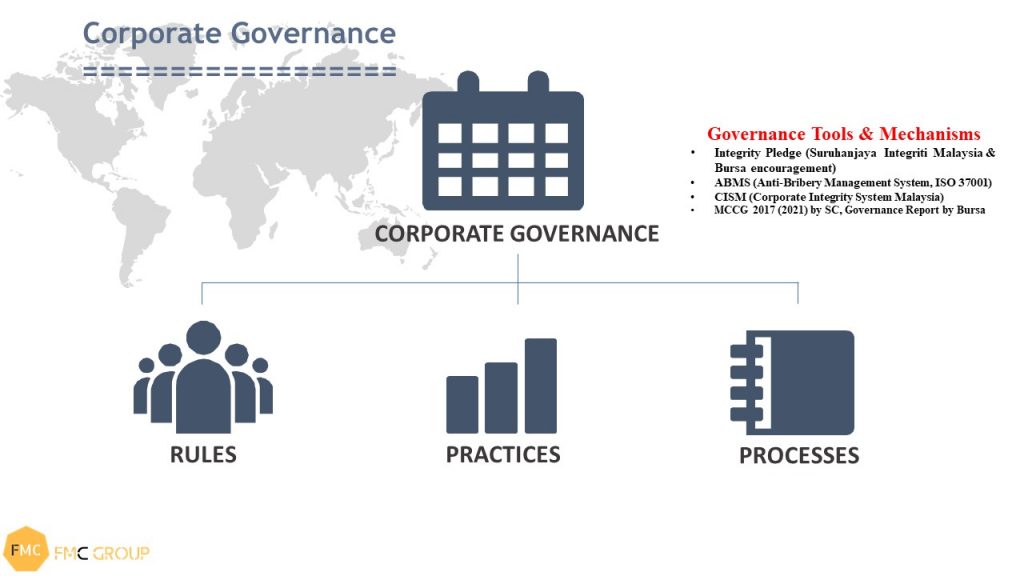
 

The Corporate Governance Key Features

Moving from Compliance to Accountability

Corporate scandals will continue unless we change how we govern.

Compliance frameworks look impressive on paper, but they mean little without accountability, independence, and integrity. Governance is not just about preventing failure; it’s about protecting trust, the very foundation of economies.

“We must move from compliance to accountability.
From paper policies to real oversight.
The future of our organisations and our economies, depends on it.”

💡 What are your thoughts? Are today’s boards and regulators truly prepared to prevent the next Enron, 1MDB, or FTX?

Share your views — let’s start the conversation. Reach out to us for more positive possibilities. 

Visit us at www.faisalmalikco.com or email us at admin@faisalmalikco.com to start your good governance journey.
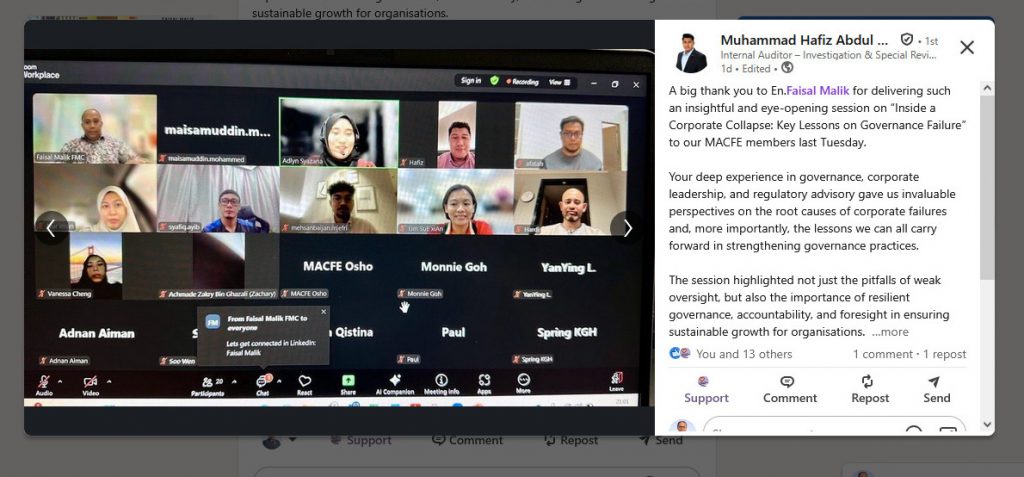
 

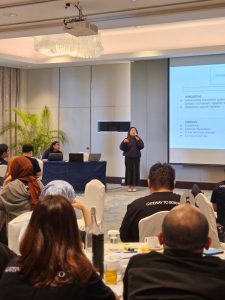
26th Aug 2025 / Honoured to be having an opportunity to speak in webinar with Malaysia chapter of the Association of Chartered Fraud Examiner (ACFE) members

Written by Mohamad Faisal, and these are his personal views.

Mohamad Faisal C.A.(M), CIPFA, CPSA, ASEAN CPA, CFP, DPIN has extensive experience in finance, corporate affairs, and SME development. He is a certified business mentor, chartered accountant, financial planner, and qualified business coach. He received exposure through the “Business Mentoring for Mentors” program from the Entrepreneurship Development Institute of India (EDII) and completed “Entrepreneurship in Emerging Economies” from HarvardX Business School. He currently serves as a council member of two national professional bodies, Chairman of SMP Malaysia, Accounting Industry Member of MPC, industry advisor to three local universities, and is also the founder of FaisalMALIK & Co [CA].

For consultancy and advisory services, contact the FMC team at admin@faisalmalikco.com


Disclaimer

All content provided on this ‘www.faisalmalikco.com’ for informational purposes only. The owner of this blog makes no representations as to the accuracy or completeness of any information on this site or found by following any link on this site.

The owner of www.faisalmalikco.com will not be liable for any errors or omissions in this information nor for the availability of this information. The owner will not be liable for any losses, injuries, or damages from the display or use of this information.

This terms and conditions is subject to change at anytime with or without notice.
Empowering Organisation: Impact-Based Strategic Planning for a Sustainable Future

How FMC Helps Businesses Innovate and Grow Through Effective Strategic Formulation

In today’s fast-changing business environment, having a strategy is not enough — what matters is having the right strategy that drives results. This is where Effective Strategic Formulation comes in.

Effective strategic formulation is the process of identifying where your organisation is today, defining where you want to be, and building a clear, actionable roadmap to get there. It goes beyond drafting vision statements and setting targets — it’s about:

  • Understanding the organisation’s real priorities
    What matters most for growth, sustainability, and long-term competitiveness.

  • Making data-driven decisions
    Combining market insights, stakeholder input, and industry trends to design strategies that actually work.

  • Aligning people and resources
    Ensuring every department, team, and individual knows their role in achieving the bigger vision.

  • Building resilience and adaptability
    Equipping the organisation to respond quickly to new opportunities and unexpected challenges.

At FMC, we believe strategy should be practical, measurable, and impact-driven. Through our Impact-Based Strategic Planning Framework, we guide organisations to innovate, prioritise, and execute with confidence — helping leaders transform ideas into tangible results.

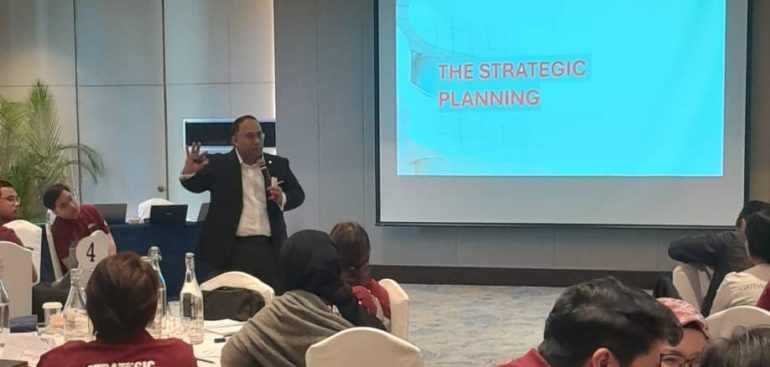
Recently, we had the privilege of working with our strategic partner AC Corporate Solution with the Sarawak Tourism Board on a transformative Impact-Based Strategic Planning Workshop — designed to help them align vision, goals, and actions to drive meaningful growth.

“We help businesses innovate and grow” — that’s not just our tagline; it’s our mission.

The Journey: Crafting Strategies That Matter
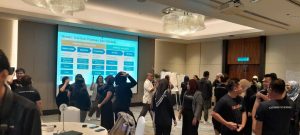
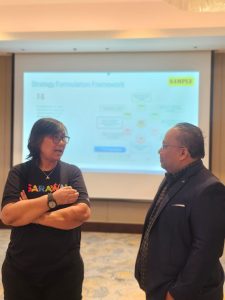
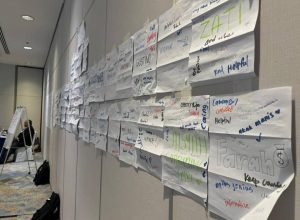
Over the course of the workshop, participants explored their organisation’s strategic direction, identified emerging challenges, and co-created practical solutions. Using FMC’s Impact-Based Strategic Formulation Framework, we guided the Sarawak Tourism Board team through:

  • Rethinking organisational priorities
  • Aligning short-term actions with long-term vision
  • Mapping stakeholder impact and sustainability outcomes
  • Embedding innovation into strategy execution

The energy, collaboration, and creativity in the room were truly inspiring. The participants left the session with a renewed sense of clarity and purpose.

Voices from the Workshop
Hearing directly from participants makes all the difference. Here are some reflections captured during the session:

“This workshop helped us see the bigger picture and identify what truly matters for our stakeholders.” — Participant

“Facilitation was practical, engaging, and results-driven. We now have a clear roadmap to execute.” — Participant

Why Impact-Based Strategic Planning Works
In today’s fast-changing environment, traditional planning methods are no longer enough. FMC’s approach focuses on:

  • Measuring real-world impact, not just setting KPIs
  • Embedding sustainability into organisational goals
  • Building agility to adapt to evolving market demands
  • Empowering teams to own and drive the strategy

Final Thoughts
This collaboration with the Sarawak Tourism Board showcases how a well-structured, impact-driven strategy can unlock new opportunities and strengthen organisational resilience.


Leadership Involvement Matters
One of the most critical factors in the success of any strategic plan is active leadership participation. When top leaders are directly involved in the formulation process, they:

  • Set a clear direction that aligns everyone to a common vision.

  • Inspire ownership and accountability across the organisation.

  • Accelerate decision-making by removing barriers and providing timely support.

Passing the responsibility of strategic planning entirely to middle managers often leads to misalignment between vision and execution. True transformation requires leaders to be the drivers, shaping the strategy and championing its implementation from the top.

Special Acknowledgment

We extend our deepest appreciation to Sharzede Datu Salleh Askor, CEO of the Sarawak Tourism Board, for her unwavering support, high dedication, and steadfast commitment to her team and the organisation. Her leadership has laid the foundation for many future successes and made the years ahead truly achievable.


If your organisation is ready to rethink its strategy and take performance to the next level, let FMC be your partner in shaping the future.

📩 Let’s talk strategy.
Visit us at www.faisalmalikco.com or email us at admin@faisalmalikco.com to start your journey.

#StrategicPlanning #Innovation #BusinessGrowth #ImpactDriven #FMC

Written by Mohamad Faisal, and these are his personal views.

Disclaimer

All content provided on this ‘www.faisalmalikco.com’ for informational purposes only. The owner of this blog makes no representations as to the accuracy or completeness of any information on this site or found by following any link on this site.

The owner of www.faisalmalikco.com will not be liable for any errors or omissions in this information nor for the availability of this information. The owner will not be liable for any losses, injuries, or damages from the display or use of this information.

This terms and conditions is subject to change at anytime with or without notice.
Malaysia to regain Top 12 position

Malaysia’s Decline in 2024 (The International Institute for Management Development (IMD) released the 2024 World Competitiveness Ranking (WCR) in June 2024).

Malaysia ranked 34th out of 67 countries, down seven places from the previous year. Malaysia’s decline was evident across nearly all factors assessed, including economic performance, government efficiency, and business efficiency.

Malaysia’s decline was evident across nearly all factors assessed, including economic performance, government efficiency, and business efficiency.

WCR Measures economies with population size and GDP, provides a benchmark for countries to measure their progress and identify areas for improvement, helps governments and companies understand where to focus their resources.

What is IMD WCR in brief –> https://www.imd.org/

Malaysia’s economic performance, infrastructure, government efficiency, and business efficiency must all be strengthened in order to raise the nation’s standing in the IMD World Competitiveness standing.

Based on my personal observations, the following are strategy that Malaysia could use, the ‘3 + 3’ focus-driven scope: The 1st 3 are Enhance Infrastructure, Boost Government Efficiency and Improve Business Efficiency which are in line with the World Bank B Ready Report’s approach. The additional 3 are Economic Performance, Business Connectivity and Political Stability.

  1. Improve the Infrastructure
  • Increase the reach of 5G networks, boost broadband adoption, and guarantee that all areas have access to reasonably priced, fast internet. Which most of our initiatives are still on going, we should be to see an improvement scoring in this segment soon.
  • Transportation: Make investments in integrated transportation networks, such as public transportation, high-speed rail which under study, and effective and competitive ports.
  • Green Infrastructure: Emphasize renewable energy sources, encourage sustainable building techniques, create environmentally friendly metropolitan environments and many other initiatives.
  1. Increase the Efficiency of Government
  • Cut Down on Bureaucracy: Make administrative procedures easier for investors and companies while lowering regulatory barriers.
  • Combat Corruption: Make government contracts and expenditures more transparent, bolster anti-corruption organizations, and impose severe sanctions.
  • Fiscal Responsibilities: Manage debt levels, maximize public spending, and guarantee equitable tax collection in order to maintain sustainable fiscal policies.
  1. Improve Business Efficiency
  • Skilled Workforce: To create a workforce that is highly trained and flexible, strategically invest in the most relevant and up to date education system, technical or TVET practical training, and upskilling programs for white collar work-force.
  • Ease of Doing Business: Make it easier to start and run a business by streamlining processes including tax registration, permits, and legal compliance.
  • Innovation Ecosystem: Encourage innovation through R&D incentives, industry-academia cooperation, and startup assistance. Focus on local and small businesses.
  • Productivity Growth: Implement business digital transformation initiatives that emphasize automation and cutting-edge technologies.

     4. Boost Economic Performance

  • Diversify the Economy: Create high-growth businesses e.g, technology, green energy, and global hub healthcare to lessen dependency on particular industries (e.g, oil and gas).
  • Encourage Exports: By assisting sectors such as electronics, palm oil, and halal products and services that have high demand worldwide, Malaysia may become a more competitive exporter.
  • Promote foreign direct investment (FDI) by streamlining the process, providing tax breaks, and boosting investor confidence through political stability.
  • Support SMEs: Small and medium-sized businesses (SMEs) are key drivers to economic growth and have to be strongly supported via finance, technology assistance, and capacity building initiatives.

     5. Promote Political Stability

  • Good Governance: Make sure that policies are explicit, reduce policy reversals, and interact with stakeholders to foster confidence.
  • Transparency: Provide investors and public with regular updates on measures to ensure accountability and reduce uncertainty
  • Public Participation: Encourage citizen engagement in policymaking through town halls, consultations, and referendums
  • Collaborate with Opposition: Foster cross-party collaboration on national issues to build a unified approach to governance.
  1. Strengthen Global Connectivity
  • Trade Agreements: To increase market access, fortify relationships with significant trade blocs (such as ASEAN, CPTPP, and RCEP).
  • International Partnerships: To improve technology transfer and information sharing, form strategic alliances with developed economies.

By focusing on these areas, Malaysia can position itself as a more attractive, competitive, and sustainable nation on the global stage, thereby improving its IMD Competitiveness Ranking.

“Sayangi Malaysiaku”

Faisal Malik

📩 Let’s talk strategy.
Visit us at www.faisalmalikco.com or email us at admin@faisalmalikco.com to start your journey.

#StrategicPlanning #Innovation #BusinessGrowth #ImpactDriven #FMC

Written by Mohamad Faisal, and these are his personal views.


Disclaimer

All content provided on this ‘www.faisalmalikco.com’ for informational purposes only. The owner of this blog makes no representations as to the accuracy or completeness of any information on this site or found by following any link on this site.

The owner of www.faisalmalikco.com will not be liable for any errors or omissions in this information nor for the availability of this information. The owner will not be liable for any losses, injuries, or damages from the display or use of this information.

This terms and conditions is subject to change at anytime with or without notice.
Glimpse of FMC Involvements in WEF IMD and WB B Ready Analysis.