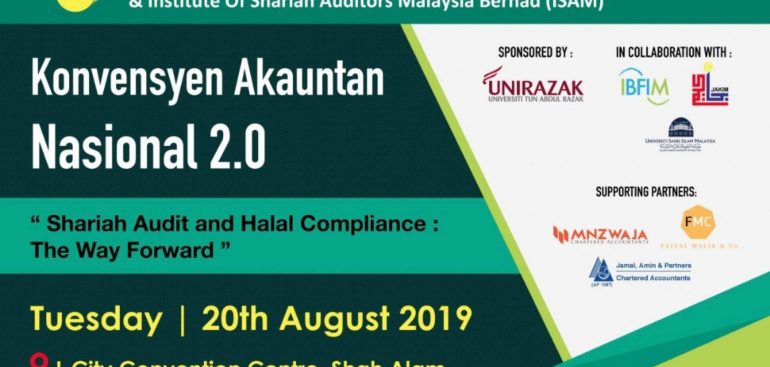
Syariah Audit and Halal Compliance; The Way Forward

Syariah audit has become an integral part of the Islamic finance institutions (IFI) ecosystem worldwide.

According to the Global Islamic Finance Markets Report 2019 by ResearchAndMarkets.com’s, Islamic Banking is the largest sector contributing to 71% or USD 1.72 Trillion, of the Islamic finance industry’s assets.

The global Islamic finance market is growing moderately, because of the strong investments in the Halal Sectors, infrastructure, and Sukuk bonds, especially through electronic modes in all products and services.

The factors driving the growth of the market are directing investment toward the tremendous growth opportunities in the promising Islamic sectors.

*MALAYSIA*

The market share of Islamic banking assets in Malaysia leap to a high of 28% in 2016 from 7.1% in 2010, And Malaysia’s Islamic banking industry will achieve a 40% market share by 2020, that covers different aspects, like Islamic Banking, Takaful: Islamic Insurance, Sukuk: Islamic Bonds, and Shariah Capital Market: Islamic funds.

*COMPETITIVE LANDSCAPE*

The global Islamic finance market is fragmented with a large number of players trying to grab a significant chunk of the developing market. In some regions, like Asia and Africa, it is moderately growing with the presence of a large number of local players and some major players. However, GCC is still a highly competitive market, with the presence of a large number of international players.

*SYARIAH AUDIT PROSPECTS*

Prospects of external Shariah audit for Shariah-compliant business:

●    IFIs: IB and takaful

●    800 over Shariah-compliant companies listed on Bursa Malaysia

●    Islamic coop

●    Halal certified companies-7204, as of Jan 2019

As we are sitting on the great potential of growth of Islamic finance and halal industry, the demand for Shariah audit function; internal and external is vast. 

The robust growth of the industry requires many Islamic finance professionals including accountants and auditors who possess related Islamic finance knowledge and exposures. Huge opportunity awaits.


SPEAKERS HIGHLIGHT

Tan Sri Dato Seri Hanafiah Hussein

Revisit your 5 years corporate strategic plan

The Coronavirus pandemic has traveled around the globe and as at the last count affected nearly 200 countries within a short period. It has taken most countries by surprise and set off motion to mitigate or stave off the deadly spread that can ultimately lead to death.

This pandemic has caused a global crisis, and it has proved that many businesses do not take a strategic, systematic, and coordinated approach to risk management, and some still not taking any strategic action to completely rethink the effectiveness of the present business approach to remain relevant in years to come. The business is no longer, as usual, the digital adoption becomes mandatory; employees were told to work from home, suppliers having difficulties on the disrupted supply chain, a commitment towards innovation and a sustainable value proposition that helps the community and the planet. 

The key now will be to move from crisis management to interim and long-term strategic planning knowing what we will face tomorrow. In a McKinsey & Co. paper, they state that the key to resetting existing strategic plans is a focus on long-term employee wellness, delivering essential value-added services to consumers, and fulfilling the social and financial wellness needs of the community.

You might not need to re-visit your organization strategic plan if all the answers are ‘YES’

  • Are we on the right path?
  • Have we corrected far enough around this obstacle?
  • Do we still have enough resources?
  • Will we get there in time?

Does our organization have …

  • Long lead time for improvements
  • The vision that doesn’t match activities
  • Annual objectives rolled out for many months
  • Year-to-year plans that never seem to connect
  • Too many projects in flight with delivering the promised results
  • Employees who don’t feel a part of a team

The objective of strategic planning.

  • To create a clear vision and action plan
  • Prioritization and focus
  • To discuss the core issues affecting your organization, (Scenario planning, competitors, changing trends, technology adoption, customer orientation, etc.)
  • Alignment with the team
  • Support culture and business transformation.

The process of strategic planning

  • Establish organization vision
  • Develop breakthrough objectives
  • Develop annual objectives
  • Deploy annual objectives
  • Implement annual objectives
  • Monthly review
  • Annual review

Does your company incorporate integrate risk management into strategic planning?

At FMC, we assist clients by providing solutions to Strategic Initiatives and understanding engagement, Strategic organization business risk workshop, and a full-fledge of development of a new strategic business perspective.

Written by Mohamad Faisal and solely his personal view, the writer will not be held responsible for the content its users choose to share, which may be offensive to others.

Mohamad Faisal C.A. (M), CIPFA, CPSA, ASEAN CPA, CFP, DPIN, HRDF Cert Trainer has wide exposures in business finance, corporate and SME development. He is a business mentor, a certified accountant, a financial planner, and a certified business mentor. He is also a ‘Business Mentoring for Mentors’ from the Entrepreneurship Development Institute of India (EDII) and ‘Entrepreneurship in Emerging Economies’ from HarvardX Business School. He was also appointed as a council member to two national professional bodies, Chairman of SMP Malaysia, Member of the MPC Accounting Industry, Industry Advisor to three local universities, and is also the founder of FaisalMALIK & co [CA].

Contact the FMC team at admin@faisalmalikco.com. for the relevant consulting and advisory services.


FMC STRATEGIC PLANNING ENGAGEMENT


Sarawak Statutory Body on Strategic Planning Advisory Workshop


Disclaimer

All content provided on this ‘www.faisalmalikco.com’ for informational purposes only. The owner of this blog makes no representations as to the accuracy or completeness of any information on this site or found by following any link on this site.

The owner of www.faisalmalikco.com will not be liable for any errors or omissions in this information nor for the availability of this information. The owner will not be liable for any losses, injuries, or damages from the display or use of this information.

This terms and conditions is subject to change at anytime with or without notice.